Improving Bone Health With Resistance Training
by Dr. Brian M. Hickey, CSCS,*D, TSAC-F*D
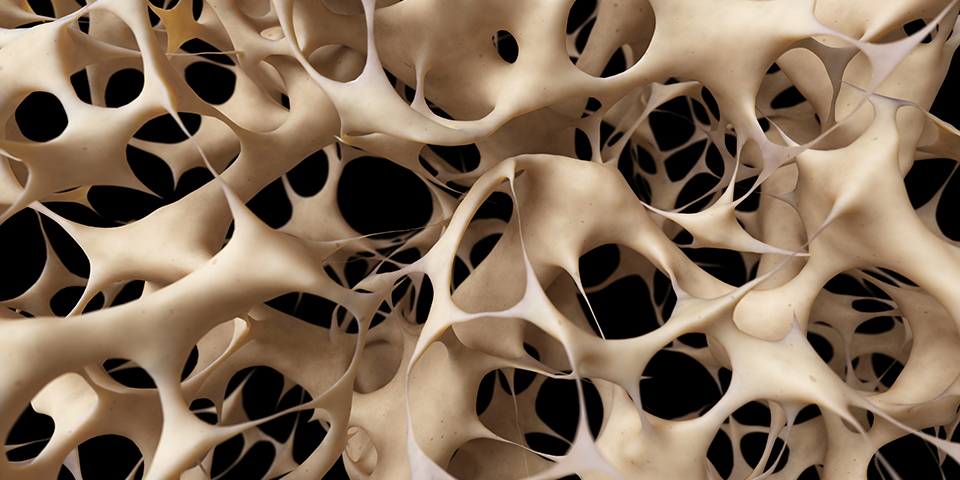
Bone When Affected by Osteoporosis
In healthy humans, bones support the body, protect vital organs, store minerals and act as levers for movement. However, when stricken by osteoporosis, these functions are compromised and bones begin to take on the look of Swiss Cheese. This decreased bone density adversely contributes to the severity of hip, vertebral and wrist fractures1.
The risk for osteoporosis increases with age. It begins to significantly impact adults over 50 and prevalence skyrockets in the over 70 demographic. Due to the cyclical nature of hormones critical to bone health, women are more at risk than men, especially after menopause.
The good news is that exercise has been shown to reduce the risk of osteoporosis2. However, cardiovascular training is not enough since it does not provide a stimulus to promote significant bone growth.
The secret sauce in the fight against osteoporosis is resistance training. Lifting heavy objects increases bone density, girding the body against the deleterious effects of chronically weak bones. Research has shown that three days per week is the ideal frequency for resistance training3.
Cyclists, and to a lesser extent triathletes, need to be mindful of the importance of including resistance training in their weekly programs. Since these athletes spend most of their training time doing non-weight bearing activities they are at risk for reduced bone density4. Bicycle crashes make these athletes vulnerable to fractures. Low density bones break easier than their high-density counterparts.
Performing high weight, low repetition sets of the bench press, deadlift and squat is the first step to using exercise to combat osteoporosis. Other modalities include high intensity activities such as box jumps, sprints and heavy sled work.
Many endurance athletes avoid resistance training because they believe it will interfere with their performance in long distance events. However, a comprehensive high intensity low volume training program can improve race results as well as overall health. A training philosophy built on resistance training coupled with high intensity cardiovascular work can play a significant role in attaining peak athletic form while simultaneously combating osteoporosis.
References
- Kennel KA and Drake MT. Adverse effects of bisphosphonates: Implications for osteoporosis management. Mayo Clinic Proceedings 84: 632–638, 2009.
- Kawao, N., and H. Kaji. Influences of resistance training on bone. Clinical Calcium1: 73-78., 2017.
- Metcalfe L, Lohman T, Going S, Houtkooper L, Ferreira D, Flint-Wagner H, Guido T, Martin J, Wright J, and Cussler E. Post-menopausal women and exercise for prevention of osteoporosis. ACSM’s Health & Fitness Journal 5: 6–14, 2001.
- Olmedillas, H., Gonzalez-Aguero, A., Moreno, L. A., Casajus, J. A., & Vicente-Rodriguez, G. (2012). Cycling and bone health: a systematic review. BMC Medicine, 10.
 runbikedoc