runbikedoc

doc's adventures in the game of life

Chasing Ghosts, Catching Dreams: A Guitarist, A Mentor, and Sacred Ground

There are moments that appear to happen in a single evening.

In truth, they have been unfolding for decades.

On Saturday, August 1, Brian Quinn will walk onto the stage at Saratoga Performing Arts Center to sit in with Get The Led Out. To most of the audience, it will be another outstanding summer concert. For Brian, it represents something far greater—a lifetime of work arriving at one of America’s great stages.

For me, it is also personal.

Brian Quinn is my guitar mentor.

His teaching, encouragement, and example shape my daily musical efforts. Every day I pick up a guitar, I hear echoes of lessons he has shared—not simply about technique or tone, but about patience, preparation, listening, and respect for the craft. As a professor, coach, and lifelong student myself, those lessons feel remarkably familiar.

Brian teaches the same way he plays—with patience, precision, and generosity. He has a gift for making difficult ideas approachable without making them seem easy. Every lesson leaves me wanting to practice rather than feeling overwhelmed. That may be the mark of every great teacher, whether in music, sport, or the classroom.

Whether the instrument is a guitar, a stopwatch, or a classroom, excellence is built the same way.

Show up.

Do the work.

Return tomorrow.

People remember the albums.

Craftsmen remember the work that made them possible.

For more than a decade, Brian stood at stage left as the lead guitarist for Candlebox, my favorite band. More than ten years. Three studio albums. Two live albums. Thousands of rehearsals, sound checks, flights, hotel rooms, recording sessions, and performances that audiences experienced as a few unforgettable hours.

Nobody becomes the guitarist trusted to carry a major touring band because of one inspired performance.

The craft is built in ordinary days repeated until they become extraordinary years.

Brian has spent a lifetime chasing ghosts.

Not haunted ones.

Guiding ones.

The ghosts of Jimmy Page and the musicians whose records first convinced a young boy to pick up a guitar. Every serious pursuit begins this way. We inherit a standard before we earn a place beside it.

Runners chase the ghosts of Frank Shorter, Steve Perfontaine, Dr. Jack Daniels, and John L. Parker Jr. Coaches chase the mentors who taught them how to see an athlete. Musicians chase the sounds that first made them believe another level existed.

You never truly catch the ghost.

You simply become worthy of sharing the road with it.

My SPAC

Long before I knew Brian Quinn, I knew Saratoga Performing Arts Center.

My parents introduced me to SPAC as a child. Every Mother’s Day we traveled there for the annual Mother’s Day concert. Music was never just entertainment in our family. It was an occasion, a tradition, and a reason to gather.

As I grew older, the venue grew with me.

In 1985, I attended my first rock concert there when The Power Station took the stage. The music was louder, the amplifiers bigger, and the crowd different, but it was the same stage that had already become part of my family’s history.

Life moved forward.

School became college.

College became graduate school.

Graduate school became a career of classrooms, laboratories, athletes, coaching, races, and writing.

Yet SPAC remained.

Most recently, I returned with my parents to hear Yo-Yo Ma and Emanuel Ax. Sitting beside them once again beneath the pines, I realized that some places quietly become part of a family’s story. The artists change. The seasons change. Parents grow older. Children become adults.

The stage remains.

That is the gift of places like SPAC.

They do not simply host performances.

They preserve memories.

Every visit adds another layer to the story.

Sacred Ground

Some stages are rented.

Others are earned.

Saratoga Performing Arts Center belongs to the second category.

Nestled among the pines of Saratoga Spa State Park, SPAC has become one of America’s great artistic crossroads. Each summer, the New York City Ballet returns to a stage that has become one of its seasonal homes. Yo-Yo Ma and Emanuel Ax have filled the amphitheater with music of extraordinary precision and grace. On other evenings, that same stage has belonged to Rush, Steve Winwood, The Power Station, and Alter Bridge.

That is what makes SPAC different.

It has never belonged to a single audience or a single tradition.

Ballet, classical music, progressive rock, hard rock, and popular music have all found a home there.

The venue asks only one question:

Is the work worthy?

Brian Quinn has spent a lifetime answering that question.

He picked up a guitar at the age of five. As a teenager he was already performing before sold-out crowds. Philadelphia became his proving ground, where he earned two Philadelphia Music Awards as Best Guitarist before his career carried him through Fosterchild and eventually into more than a decade as lead guitarist for Candlebox. Three studio albums. Two live albums. A career built through repetition, discipline, and a relentless commitment to becoming better.

There is another fitting layer to this performance.

Get The Led Out is not about imitation.

It is about honoring Led Zeppelin’s music by bringing it to life for another generation. Every musician begins by learning the language of those who came before before gradually discovering a voice that is unmistakably their own.

The ghosts are never copied.

They are honored.

There is a quiet symmetry in Brian’s arrival at SPAC.

His career has never been confined to one musical lane, and neither has this stage. Both have been defined by versatility, craftsmanship, and respect for the work itself.

The music changes.

The standard does not.

That is why this night matters.

Brian Quinn will walk onto the SPAC stage with Get The Led Out.

I will not be there to hear the first note.

Of course I wish I could be.

But some performances deserve celebration whether witnessed from the audience or from afar.

This performance is not simply another concert.

It is the visible expression of thousands of invisible days.

The hours no one applauded.

The scales repeated until they became instinct.

The rehearsals that ended long after everyone else had gone home.

Dreams are rarely caught in a single evening.

They are assembled quietly.

Another practice.

Another rehearsal.

Another lesson.

Then, eventually…

Another stage.

The ghosts remain.

They always will.

They continue to call us toward better work.

Distance runners and musicians spend much of their lives pursuing standards they may never completely reach. Yet the pursuit itself changes them. The finish line, the final chord, and the standing ovation are only moments. The real achievement is becoming the kind of person capable of reaching them.

Every time I pick up my own guitar, I am reminded that the dream is rarely found in one performance.

It is found in returning to the instrument one more day.

Congratulations, Brian.

Enjoy every note beneath the pines at SPAC.

You earned it.


Author’s Note

This essay is a personal reflection inspired by Brian Quinn’s guest appearance with Get The Led Out at Saratoga Performing Arts Center.

It is not intended to be a comprehensive biography, but rather a meditation on craftsmanship, mentorship, perseverance, and the places that quietly become part of our lives. Career details are drawn from Brian Quinn’s official biography and other publicly available sources. The reflections and experiences shared here are my own.

For more than four decades, SPAC has been woven into my family’s story. My parents first introduced me to the venue through the annual Mother’s Day concerts. My first rock concert there was The Power Station in 1985. More recently, I returned with them to hear Yo-Yo Ma and Emanuel Ax. Those experiences gave SPAC a permanent place in my life long before Brian became my guitar mentor.

This essay is offered simply as an expression of gratitude—for the music, the lessons, the mentorship, and the enduring reminder that the pursuit of excellence is measured not by a single performance, but by a lifetime of returning to the work.
Norwich University Presentation Notes

Improving Bone Health With Resistance Training

osteoporosis

Bone When Affected by Osteoporosis

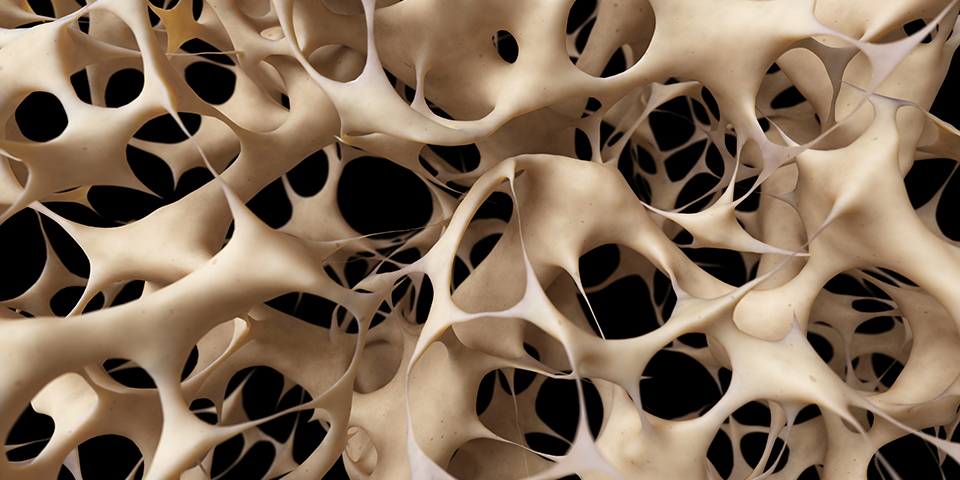
In healthy humans, bones support the body, protect vital organs, store minerals and act as levers for movement. However, when stricken by osteoporosis, these functions are compromised and bones begin to take on the look of Swiss Cheese. This decreased bone density adversely contributes to the severity of hip, vertebral and wrist fractures1.

The risk for osteoporosis increases with age. It begins to significantly impact adults over 50 and prevalence skyrockets in the over 70 demographic. Due to the cyclical nature of hormones critical to bone health, women are more at risk than men, especially after menopause.

The good news is that exercise has been shown to reduce the risk of osteoporosis2. However, cardiovascular training is not enough since it does not provide a stimulus to promote significant bone growth.

The secret sauce in the fight against osteoporosis is resistance training. Lifting heavy objects increases bone density, girding the body against the deleterious effects of chronically weak bones. Research has shown that three days per week is the ideal frequency for resistance training3.

Cyclists, and to a lesser extent triathletes, need to be mindful of the importance of including resistance training in their weekly programs. Since these athletes spend most of their training time doing non-weight bearing activities they are at risk for reduced bone density4. Bicycle crashes make these athletes vulnerable to fractures. Low density bones break easier than their high-density counterparts.

Performing high weight, low repetition sets of the bench press, deadlift and squat is the first step to using exercise to combat osteoporosis. Other modalities include high intensity activities such as box jumps, sprints and heavy sled work.

Many endurance athletes avoid resistance training because they believe it will interfere with their performance in long distance events. However, a comprehensive high intensity low volume training program can improve race results as well as overall health. A training philosophy built on resistance training coupled with high intensity cardiovascular work can play a significant role in attaining peak athletic form while simultaneously combating osteoporosis.

References

  1. Kennel KA and Drake MT. Adverse effects of bisphosphonates: Implications for osteoporosis management. Mayo Clinic Proceedings 84: 632–638, 2009.
  2. Kawao, N., and H. Kaji. Influences of resistance training on bone. Clinical Calcium1: 73-78., 2017.
  3. Metcalfe L, Lohman T, Going S, Houtkooper L, Ferreira D, Flint-Wagner H, Guido T, Martin J, Wright J, and Cussler E. Post-menopausal women and exercise for prevention of osteoporosis. ACSM’s Health & Fitness Journal 5: 6–14, 2001.
  4. Olmedillas, H., Gonzalez-Aguero, A., Moreno, L. A., Casajus, J. A., & Vicente-Rodriguez, G. (2012). Cycling and bone health: a systematic review. BMC Medicine, 10.

Back to School Success Tips

With the holidays over, it back to school time again. Some scholars seek to repeat the success of the past semester, while others are excited about a chance for redemption. Either way a tabula rasa1 for academic endeavors awaits.

A problem created by the protracted holiday break is rooted in the training principle of reversibility which states: if you don’t use it you lose it. Translated to scholarly pursuits this means an erosion of study skills and habits conducive to academic success has occurred while you were away from the books.

Here are some ways to stack academic the deck in your favor this semester:

  1. Study every day

Treat school like a job. Invest time to learn the material. Every day review your notes and read your textbook for each class you are taking. The more you are exposed to the material, the better you will do in class.

  1. Use your resources

Wikipedia can be helpful, but professors and teachers are experts who are paid to help you learn. See them outside of class if there is something you don’t understand. Remember, you are investing a lot of time and money in your education. Make sure to maximize the return on your investment.

  1. Practice before each test

Take a practice test or use flash cards to identify where you need to concentrate your study efforts. By understanding your strengths and weaknesses and catering your studying to each, you will be more in command of your academic destiny and less stressed about quizzes and tests.

  1. Be organized and have a plan

Failing to plan is planning to fail. Know when all assignments are due and have a strategy for getting everything done. Commit the necessary time to do high quality work.

  1. Mens sana in corpore sano2

Get in the habit of practicing good nutrition habits and getting regular exercise. Try to exercise for at least 150 minutes a week. That’s less than ½ an hour each day! For maximum mental and physical sharpness, embrace the Crossfit nutritional philosophy: eat meat and vegetables, nuts and seeds, some fruit, little starch and no sugar. Keep intake to levels that will support exercise but not body fat.

  1. Get the sleep you need

Sleep is when the body grows and repairs. It is also when the immune system does some great work. Seven to eight hours of sleep each night is necessary to keep you mentally and physically sharp.

  1. Watch the caffeine

Too much caffeine can make you jittery and increase pre-test nervousness. It can also interfere with your sleep. It is best to only ingest 200mg of caffeine each day, or the equivalent of two cups of coffee. Also, the last call for caffeine should be at 4 pm each afternoon.

  1. Relax and enjoy

Find positive ways to relax when not working. If stress builds up, techniques such as deep breathing, meditation and yoga can help put your mind and body in the right state. Also remember that school is not just about academics, it is also about your experiences outside of the classroom.

Good skill this semester and as always thanks for reading, doc

Footnotes

  1. Tabula rasa is Latin for “a blank slate”.
  2. Mens sana in corpore sano is Latin for “a sound mind in a sound body”.

Evolution Not Revolution

Making a lasting improvement in your life is a gradual, evolutionary process. Considerable thought and preparation must precede action in order to increase the probability of success. This is why it is necessary to focus on improving one thing at a time.

You need to know yourself and this begins with examining your motivation.

Motivation, the whys of behaviors, is defined as why you do what you do.

Prior to embarking on any life improvement project it is mission critical to understand the causes of your current habit and the reasons for changing.

If the costs of change do not outweigh the benefits, permanency will not take root.

This journey has four steps:

  1. Contemplation

The thinking stage, where commitment is formulated. You understand that you are not where you want to be and that you want to make a positive change sometime in the near future. This stage is built on personal responsibility and taking responsibility in both your current state and future results.

  1. Preparation

This stage can be summarized in one word “intention”. Now the knowledge is gained: books are read, experts consulted and a start date is set. A plan comprised of a series of small steps is devised. This period should last approximately one month, culminating in a start date.

  1. Action

When the clock strikes midnight on your start date, the rubber meets the road. Be prepared to invest a considerable amount of time and energy in your commitment. Become the CEO of You, Inc. Take ownership of your decisions and actions. Enlist the support of others to strengthen your commitment.

  1. Maintenance

Savor the victory of achieving the first change on your list. Make sure the change is permanent before starting all over again with another behavior. Remember that it takes at least two months of consistent success for the behavior to be considered changed.

Life is about the journey, not the destination. Enjoy each day in the process.

Thanks for reading, doc

The Myth of the New Year’s Resolution

Don’t do it!

A multitude of Americans are waking up today after an alcohol fueled night of New Year’s Eve revelry and embarking on their complete life make over project. Don’t be one of them.

Every January health club memberships swell and bookstores sell out of self-help books as people seek to rebuild their entire lives with the dreaded litany called the New Year’s Resolution.

There are four key reasons that New Year’s Resolutions are doomed to failure.

  1. Too much emotion, not enough facts

Decisions are made based on facts and emotions. At least 10% of every decision is based on emotion and as the speed of the decision increases, so too does the emotional content. Former University of Connecticut Basketball coach Jim Calhoun once roared “Get some facts and come back and see me!” at an unsuspecting reporter. Follow his lead when it comes to making any goals for the New Year. Before starting on the journey of change go on a fact finding mission, building a foundation of knowledge.

  1. Low emotional energy

New Year’s Eve and New Year’s Day are the closing acts to the holiday season. Consequently, we are emotionally drained and fragile. Embarking on a self-improvement laundry list at this time of year invites failure and decreased self-esteem. Couple this with the depths of winter when you get the annual energy nadir. Instead, winter is the best time to prepare. Spring, the season of new life, is the best time for action.

  1. Trying to change too much

When teaching sport skills, the rule of thumb is to identify the one error that, when corrected, will make the biggest improvement in performance. Only when the athlete successfully executes the new and improved movement consistently, is the next fundamental flaw addressed. Take this approach when catching your dreams. Pick the one thing that will make the most impact on your life and leave everything else alone. Maybe it is getting eight hours of sleep each night or reducing your intake of simple sugars. The key is to pick one and work on it every day for two months. At the end of these eight weeks, this change should take hold. Then it’s time to start improving the next big thing.

  1. Trying to change too fast

It takes the body three weeks to adapt to a physical change. It takes the mind a little longer than that – somewhere along the line of 60 days. Think about how long it took to develop whatever you are trying to change. Chances are it didn’t crop up overnight. So it is going to take some time to reverse the trend. Embrace the challenge and prepare for the long haul.

Unfortunately 90% of all the weight that is lost in 2015 will be regained by 2017. Although the gyms may be packed now, wait until after Valentine’s Day and you will never hear that dreaded phrase “Mind if I work in?” Don’t be another statistic. Embark on a plan of slow and steady growth of body, mind and spirit. The race isn’t always to the swift, but to those who keep going.

Thanks for reading, doc

A Successful Day at the Races

DSC01441

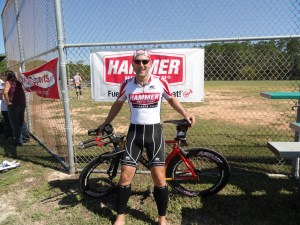
Celebrating another overall win at the Beach Blast Duathlon

Mexico Beach, FL